Automatic Casting Systems in Silver Refining Smart Factories
The global silver refining industry is currently undergoing a massive digital transformation. As a result of skyrocketing demand for high-purity silver in electronics, solar energy, and investment sectors, traditional smelting and manual casting methods are no longer sufficient. Therefore, industrial leaders are actively seeking smarter solutions. To address this challenge, the industry has introduced advanced Automatic Casting Systems. These systems represent a revolutionary leap forward in metallurgical engineering because they seamlessly combine automation, robotics, and real-time data analytics. Consequently, they completely redefine how silver ingots are produced.
https://www.goldsrefining.com/product/thailand-fully-automated-silver-ingot-refining/
The Evolution of Silver Ingot Production and Automatic Casting Systems
For decades, casting silver ingots was a labor-intensive, hazardous process. For instance, operators constantly faced extreme heat, potential exposure to toxic fumes, and the physical strain of handling heavy molds. Furthermore, manual pouring often led to inconsistencies in ingot weight, surface defects, and internal cavities. Ultimately, these defects compromised the quality of the final product.
Fortunately, modern smart factories have solved these challenges by replacing manual intervention with closed-loop automated hardware. In doing so, they eliminate human error entirely. As a beneficial consequence, implementing Automatic Casting Systems ensures unmatched precision, maximum safety, and optimized resource efficiency throughout the facility.
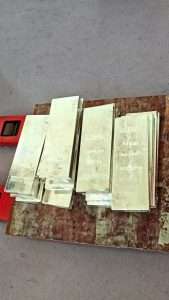
Technical Stages of Modern Automatic Casting Systems
The casting line acts as the heart of a modern silver refinery. Specifically, it integrates several high-tech components to transform molten silver into pristine, market-ready ingots. To better understand the process, we can break down its primary functions.
1. Precision Induction Melting within Automatic Casting Systems
Before casting begins, raw silver is melted using advanced, energy-efficient induction furnaces. Meanwhile, the system continuously monitors and maintains the molten silver at a precise temperature. By doing so, it ensures optimal fluidity. In addition, it prevents premature solidification or oxidation before entering the pouring stage.
2. Automated Quantitative Pouring via Automatic Casting Systems
Weight accuracy is critical when dealing with precious metals. Therefore, the automatic casting setup utilizes high-precision load cells and servo-driven pouring mechanisms.
-
First, the system calculates the exact volume of molten silver required for each ingot size.
-
Next, it executes a smooth, controlled pour to eliminate splashing.
-
Finally, it ensures a perfectly uniform weight every single time.
3. Robotic Mold Management inside Automatic Casting Systems
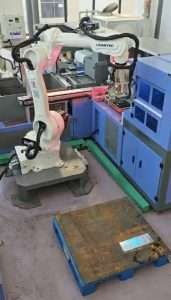
In addition to pouring, robotic arms handle the entire mold lifecycle. For example, they manage everything from applying release agents to moving filled molds through specialized cooling tunnels. Importantly, controlled cooling profiles are vital to achieving a flawless surface finish. Simultaneously, they create a tight crystalline structure, which gives the silver ingots their signature mirror-like appearance.
4. Smart Stamping and Laser Engraving via Automatic Casting Systems
Once the ingots are cooled and demolded, they are automatically transferred to an integrated stamping or laser engraving station. At this stage, the system instantly engraves critical data directly onto the bar. Specifically, this includes serial numbers, purity marks, and weight specifications. Moreover, QR codes can be added for blockchain-backed traceability.
Measurable Strategic Advantages of Automatic Casting Systems
Implementing modern Automatic Casting Systems offers significant competitive advantages for silver refiners looking to scale their operations.
| Feature |
Traditional Casting |
Automatic Smart Casting |
| Weight Consistency |
Variable (Requires manual trimming) |
Ultra-precise ($\pm 0.1\%$ variance or lower) |
| Safety Risk |
High (Extreme heat, heavy lifting) |
Low (Isolated robotic operations) |
| Production Speed |
Slow, batch-dependent |
Continuous, high-throughput |
| Data Traceability |
Manual logging (Prone to errors) |
Automated IoT tracking & ERP integration |
Uncompromising Quality Control via Automatic Casting Systems
In terms of quality control, the smart factory utilizes AI-driven machine vision systems to inspect every single ingot for surface imperfections. If a bar is found to be sub-standard, it is automatically flagged by the software. Subsequently, the system routes it back to the melting furnace. Thus, only flawless products ever reach the market.
Sustainability and Environmental Efficiency of Automatic Casting Systems
Finally, smart casting systems are designed to minimize heat loss and reduce carbon emissions. Through advanced thermal insulation and optimized power management, these factories successfully reduce energy consumption per ton of silver produced. As a result, they easily align refineries with modern environmental standards.
Conclusion: The Future of Precious Metal Refining
In conclusion, upgrading to automated technology is more than just a minor enhancement in machinery. Instead, it represents a complete overhaul of how precious metals are processed worldwide. Ultimately, as the global market for silver continues to grow, smart factories equipped with these automated systems will undoubtedly lead the industry into a more efficient future.
https://www.tiktok.com/@zzjq8888/video/7562387927179791627
 Call us now: