Call us now:

Machinery Ready for Major Gold Project as Site Work Continues
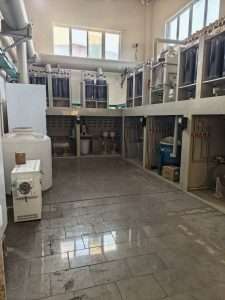
Work on the $1,500\text{ m}^3/\text{h}$ gold ore heap leaching project is moving ahead fast. Recently, the team reached an important goal. Factory testing for three 5-ton/day gold electrolysis units is now finished. Therefore, the machinery is cleared to ship to the project site right away.
https://www.goldsrefining.com/
Simple Steps in Gold Recovery
Heap leaching is a common way to get gold out of rock. First, workers stack crushed ore onto large pads. Next, a chemical liquid drips through the rock pile. This liquid dissolves the tiny bits of gold. Then, the solution collects in ponds at the bottom.
Because this plant handles a large flow of $1,500\text{ m}^3/\text{h}$, it needs strong recovery systems. The three 5-ton/day units process the gold in three simple steps:
-
Stripping: First, hot liquids remove the gold from loaded carbon.
-
Collecting: Next, an electric current pulls the gold onto metal plates.
-
Smelting: Finally, workers collect the gold mud and melt it into gold bars.
Using three separate units gives the plant great flexibility. For instance, operators can run all three units during busy periods. However, they can also pause one unit for repairs while the other two keep running.
https://www.tiktok.com/@zzjq8888
Careful Testing for Plant Safety
Safety is very important in a gold processing plant. For this reason, engineers tested all three units under high pressure before shipping.
During these tests, workers checked every pipe and tank for leaks. Luckily, the equipment passed every test with success. As a result, the machines will run safely without sudden stops.
Parallel Progress on the Construction Site
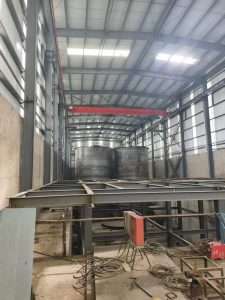
While factory workers tested the machines, site crews worked hard on the ground. For example, workers are building pads and lining the solution ponds.
Because the factory tests are done, the logistics team can ship the units immediately. Consequently, the machines will arrive just as the concrete bases are ready. This careful timing prevents costly delays.
Next Steps for the Project
-
First, workers will pack and ship the three units safely.
-
Next, heavy cranes will lift the units onto concrete pads.
-
Then, technicians will connect the pipes and power lines.
-
Finally, engineers will test the systems with water before processing real solution.
In short, passing these tests keeps the whole project moving forward on time.