Introduction: Common Wrong Responses to Low Gold Recovery in CIL Circuits
Gold recovery rates often drop in conventional Carbon-in-Leach (CIL) mining circuits. Most on-site teams choose quick, reactive fixes to solve this problem. They usually add more cyanide reagents, adjust ore grinding fineness or replace activated carbon directly. However, these emergency adjustments rarely tackle root causes. As professional process engineers confirm, tiny fluctuations in two core indicators trigger most gold loss issues: unstable pH value and insufficient dissolved oxygen (DO).
Therefore, mining teams must keep leaching parameters inside a stable Goldilocks zone. The ideal pH range stays between 10.5 and 11.0. Meanwhile, operators need to avoid DO shortage caused by reactive sulfide minerals and insufficient tank agitation. Stable parameter control cuts reagent costs effectively and lowers gold content in final tailings. Even so, perfect upstream leaching performance cannot guarantee maximum project profits. In fact, optimized CIL tanks only finish half of the gold extraction workflow. To boost overall ROI steadily, mines must match upstream process upgrades with high-precision downstream refining equipment. This is exactly the core advantage of Zhengzhou Jinquan Precious Metal Refining Equipment Co., Ltd. The company converts optimized metallurgical extraction effects into high-purity, market-ready gold bullion via professional equipment and one-stop EPC solutions.
1. Why Upstream CIL Optimization Wastes Value Without Qualified Downstream Refining
On-site staff monitor three key CIL KPIs daily: pH level, dissolved oxygen concentration and carbon loading capacity. Precise control of these indicators helps gold attach to activated carbon efficiently from ore slurry. After adsorption, factories strip gold from loaded carbon and produce crude doré bars in follow-up procedures.
Nevertheless, inefficient backward refining equipment will completely offset all upstream optimization gains. Just as unstable chemical environments inside leaching tanks cause hidden gold loss in tailings, outdated refining systems bring three common operational pain points. Firstly, it leads to mutual contamination between gold and silver during separation. Secondly, it slows down the whole refining cycle and reduces production turnover efficiency. Thirdly, it raises unnecessary power consumption and increases overall operating costs.
Against this industry pain point, Zhengzhou Jinquan acts as a reliable bridge connecting front-end mineral extraction and back-end standard bullion delivery. As a national high-tech enterprise with global business layout, the company focuses on precious metal smelting, fine refining and environmental protection EPC turnkey projects. All customized equipment and engineering solutions ensure mines retain every gram of gold recovered from optimized CIL circuits and obtain high-purity finished products.
2. Matching CIL High Precision: Core Advanced Refining Equipment from Zhengzhou Jinquan
Modern CIL production requires real-time accurate parameter monitoring. Similarly, downstream refining lines need automated, high-precision supporting equipment to coordinate upstream processes. For this demand, Zhengzhou Jinquan develops a full set of intelligent refining devices targeting gold mining projects, which cover all production links from pregnant solution treatment to finished ingot casting.
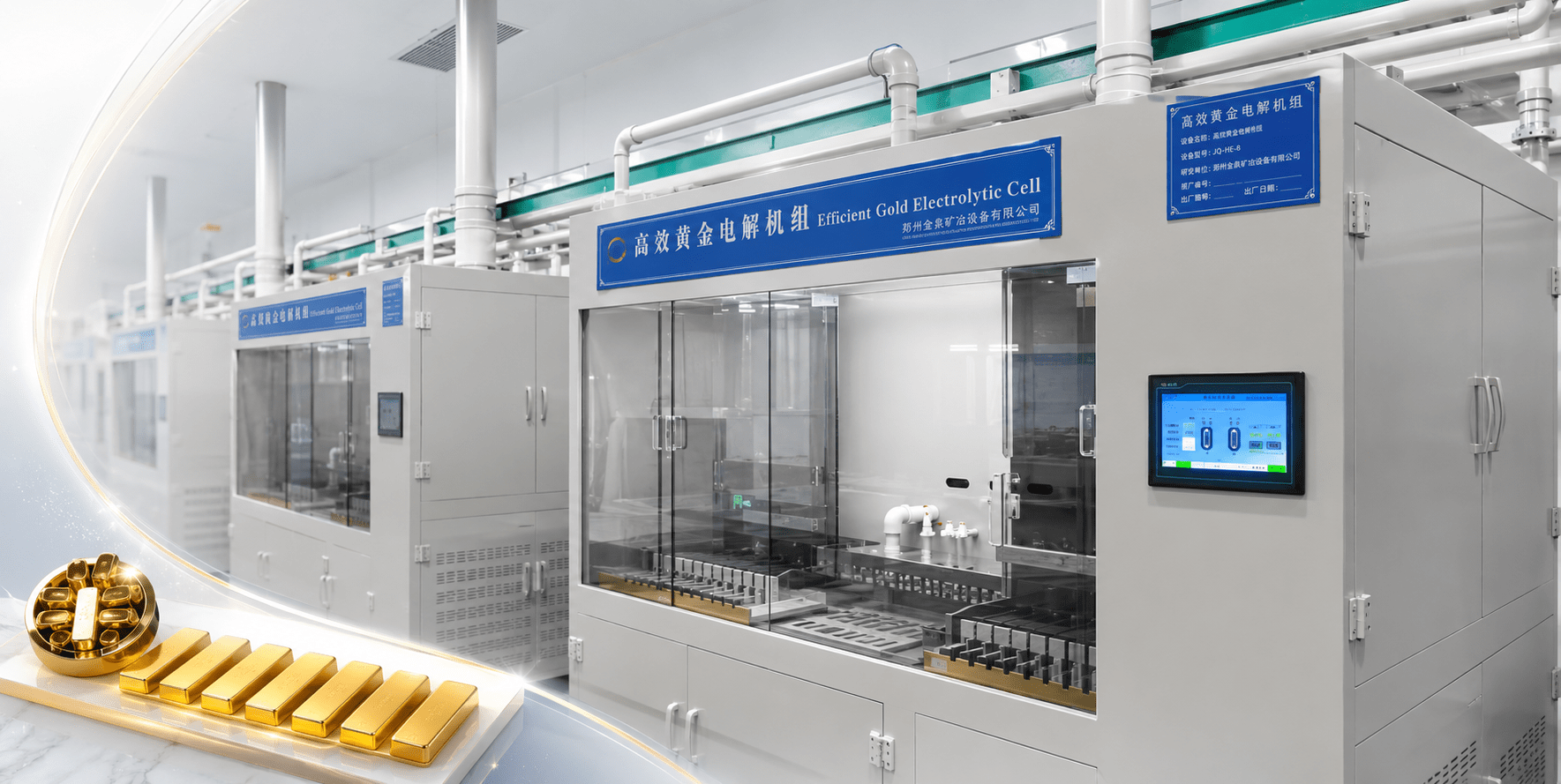
2.1 High Current Density Gold & Silver Electrolysis Units
After staff complete carbon stripping procedures in CIL workshops, these electrolysis units start deep purification work. The equipment supports stable long-term operation under high current density. It can refine crude gold and silver products to 99.99% standard purity, and even reach 99.999% ultra-high purity for customized high-end production demands. It perfectly meets international bullion trading standards.
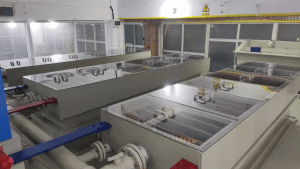
2.2 Swirl Electrowinning Units
Pregnant solution from different CIL batches always has unstable metal concentration. For this variable working condition, swirl electrowinning units show strong adaptability. They capture residual gold elements efficiently in barren liquid. In this way, it minimizes metal waste in waste liquid, just like precise DO and pH control minimizes gold residue in CIL tailings.
2.3 Integrated NOx Waste Gas & Acid Mist Treatment System
Complete process optimization covers not only metal recovery efficiency but also on-site safety and environmental compliance. Refining workshops produce harmful acid mist and nitrogen oxide waste gas during electrolysis. Jinquan’s independently developed gas treatment system eliminates such pollutants efficiently. It helps mining enterprises meet local environmental discharge standards without interrupting production lines.
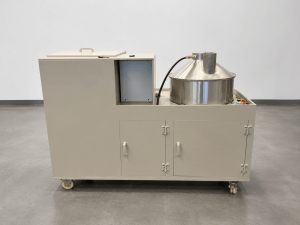
2.4 Vacuum Ingot Casting Machines
This equipment serves as the final terminal of the whole gold production chain. It adopts vacuum casting technology to avoid metal oxidation. It produces standard, high-precision gold ingots with uniform density and complete surface texture. It finally converts extracted gold resources into tradable fixed assets for mines.
3. Full-Process Turnkey EPC Services: Holistic Optimization for Entire Metallurgical Workflow
Operators need to monitor parameter consistency across all leaching tanks to stabilize overall CIL performance. Similarly, refinery construction and upgrading require systematic overall engineering planning instead of single equipment replacement. For this reason, Zhengzhou Jinquan provides full-process EPC (Engineering, Procurement, Construction) turnkey services for precious metal refineries.
Specifically, the one-stop service covers the whole project lifecycle. It starts with early-stage workshop layout design and targeted equipment manufacturing. It also includes on-site installation, systematic equipment commissioning before production, and professional operation training for on-site workers. As a result, every newly built or renovated refinery can run at the lowest energy consumption and the highest operating efficiency from day one.
Besides, the company owns more than 43 independent patents focused on precious metal refining core technologies. It has established long-term stable cooperative relations with top domestic mining groups, including China Gold, Shandong Gold and Zijin Mining Group. Rich project experience and patented technology guarantee sustainable and reliable operation for supporting refining lines of large-scale CIL mines.
4. Sync Upstream and Downstream: Maximize Gold Recovery Across the Whole Production Chain
To sum up, precise pH and DO management prevents valuable gold from flowing into tailings in upstream CIL links. Meanwhile, matched high-performance refining equipment and professional EPC services from Zhengzhou Jinquan avoid hidden efficiency losses in the final refining stage.
Real mining operational excellence never relies on single-process optimization alone. Instead, it requires synchronous control covering the full metallurgical lifecycle: from ore leaching and carbon adsorption to electrolytic refining and finished ingot casting.
Core Question for Mine Operators: Does your current downstream refining line keep synchronous efficiency with your upgraded upstream CIL circuits?
 Call us now: