Common Gold Identification Methods: Complete Guide to Gold Purity Testing
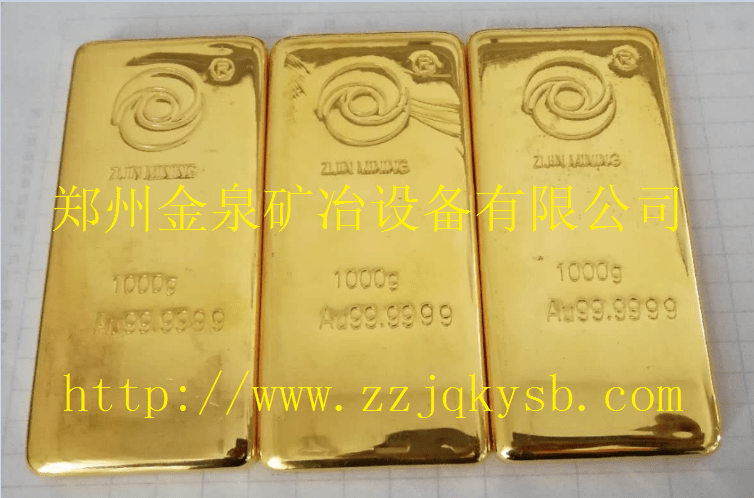
Accurate gold identification and purity testing remain critical for gold ore processing, precious metal recycling, jewelry appraisal and mineral resource evaluation. As global mining technology and precious metal trade continue to expand, multiple professional gold testing methods have gained wide recognition across the industry. Zhengzhou Jinquan Mining Equipment specializes in mineral processing and precious metal separation equipment. This article sorts out mainstream gold identification technologies in detail, so global buyers can pick reliable detection solutions for mining production and commercial valuation.
1. Two Core Categories of Gold Identification Methods
All gold testing technologies can be divided into two core types: destructive identification and non-destructive identification. Every testing mode carries unique strengths and targeted application ranges in daily operation.
Destructive gold identification relies on chemical or physical processing to break down gold samples for component analysis. For instance, industrial aqua regia can dissolve raw gold materials and form stable chemical solutions for precise element testing. Such chemical analysis delivers highly accurate data, yet it will permanently damage original samples. For this reason, destructive testing never applies to finished gold jewelry or high-value precious metal products.
Non-destructive gold testing, by contrast, keeps sample integrity without surface scratches or internal structural damage. Typical spectral detection serves as a representative example; it creates stable electric arcs through charged gold particle electrodes and captures real-time spectral signals to analyze gold purity. Furthermore, non-destructive techniques dominate modern finished gold inspection, fine mineral detection and daily consumer appraisal scenarios.
2. Mainstream Non-Destructive Gold Identification Technologies
Non-destructive testing stands as the most practical technology in modern gold appraisal, mining monitoring and jewelry inspection work. Four widely adopted options cover touchstone testing, microarea analysis, specific gravity testing and X-ray fluorescence spectroscopy.
2.1 Touchstone Testing Method
Touchstone testing refers to a traditional, user-friendly gold identification technique that requires no complicated auxiliary equipment. Operators gently scratch gold samples on professional touchstones, then compare scratch tones with standard gold sample strips to judge authenticity and purity.
This low-cost solution has served the precious metal industry for decades. Nevertheless, it comes with notable functional limitations. Manual operation easily leads to obvious testing errors and reduces overall detection precision. In addition, repeated scratching will cause minor wear on gold ornaments, while matched standard gold sample sets also require high procurement budgets.
2.2 Microscopic & Micro-Area Analysis
Major micro-area analysis tools include electron probe detection, laser micro-surface spectroscopy and SEM energy spectrum scanning. These advanced tools focus on tiny local areas of gold samples and emit high-density electron beams or laser beams for targeted irradiation.
Different spectrum and energy spectrum data will generate after beam irradiation on micro zones. Professionals can calculate gold grade and harmful impurity content through captured data. In mineral processing, this method works perfectly for fine-grained gold grade inspection inside raw gold ore. On the other hand, it shows obvious shortcomings when testing refined gold products and jewelry. Limited sampling areas weaken sample representativeness, and such restriction will lower detection sensitivity and final accuracy.
2.3 Specific Gravity Method (Density Testing)
The specific gravity method acts as an efficient, modern technique for rapid gold identification. It can finish gold ornament authenticity checks and content measurement within several minutes; therefore, it fits perfectly for fast on-site industrial testing.
High-precision analytical balances or upgraded diamond balances serve as the core testing instruments for this method. It follows Archimedes’ basic principle and measures sample weight in air and carbon tetrachloride solution to calculate gold density and overall purity. The standard gold content calculation formula is listed below:
Q = [M / (M+N)] × 1.58
The figure 1.58 represents the fixed density coefficient of carbon tetrachloride solution. If workers replace it with other heavy liquid solutions, they must adjust the coefficient value in a timely manner. Apart from this, test results need scientific correction based on gold product weight and surface condition, so final gold content data can stay credible.
In ideal laboratory conditions, the specific gravity method only produces 0.3% to 0.5% detection error and ensures stable identification accuracy. Moreover, its simple equipment configuration and low operating costs make it easy for large-scale industrial promotion. It has become a cost-efficient choice for fast batch gold detection.
Nevertheless, this method still has clear application boundaries. It cannot distinguish gold-plated or composite clad gold ornaments effectively. Excessive internal impurities and tiny structural pores will also trigger data deviation during testing. Meanwhile, surface tension in liquid environments cannot be eliminated completely, which further limits accuracy improvement. Consequently, the specific gravity method is only suitable for rough gold content evaluation in routine work.
2.4 X-Ray Fluorescence Spectroscopy (XRF)
X-ray fluorescence spectroscopy represents a cutting-edge non-destructive gold identification technology developed in recent years. It depends on computer-controlled high-precision XRF spectrometers as core testing hardware.
High-energy X-rays evenly irradiate large surfaces of gold samples during operation. Professional equipment records fluorescent X-ray spectrum changes and strength variations in real time. After data collection, the supporting computer system will automatically verify gold authenticity and calculate the specific proportion of gold and mixed impurity elements.
This eco-friendly testing process needs no chemical reagents and creates no industrial pollution. It causes zero sample damage and leaves no radioactive residues after each test. In addition, it overcomes most defects of traditional testing methods and balances high detection accuracy with stable sensitivity.
Due to its superior comprehensive performance, relevant official institutions in China have selected X-ray fluorescence spectroscopy as the standard testing technology for gold and luxury jewelry. It will gradually replace outdated traditional methods and become the leading high-precision solution for large-scale precious metal appraisal projects.
3. Selection Suggestions for Gold Identification Methods
Mining and mineral processing enterprises should prioritize micro-area analysis and XRF spectroscopy for stable gold ore grade monitoring. Jewelry retailers and individual consumers can choose touchstone testing or specific gravity detection to balance cost and operational efficiency. In high-value refined gold transactions, high-precision X-ray fluorescence testing remains the most trustworthy option.
As a professional mining equipment manufacturer, Zhengzhou Jinquan Mining Equipment delivers one-stop supporting solutions for gold ore beneficiation, gold separation and full-set precious metal detection. We combine mature mineral processing experience with advanced gold identification technologies. In the end, we help global partners boost production efficiency and control product quality in gold mining, ore processing and precious metal recycling industries.
 Call us now: